Thursday, September 29, 2011

Devon GTX 2009


Of the many many dreamers out there that come up with a car concept to me the Devon GTX is one that really should have made it. Unfortunately bad timing due to bad luck caused it to be another project that was never to be.

The GTX was based on a complete Viper chassis but with an upgraded engine making 650 hp. This combined with a target weight of 3000 lbs. from its carbon fiber body would have given the Devon a better power to weight ratio than a Ferrari Enzo. That would explain why it was able to lap Laguna Seca (1:35.075!) and Willow Springs in record time for a production car! So it wasn't just a pretty face...there was some serious performance potential in there.

However...that's not why I liked this car so much. For me it was more about the design and the details. The whole car just screams concept car! Every detail looks like it belongs in a one off show car, and it was all supposed to be production ready.

In the end the threat of Chrysler selling of the Viper division as a complete entity due to their near bankruptcy made the whole project collapse. The fact that the cars were to cost $500,000 each certainly didn't help things. In total only 2 cars were built. One was kept by the company and the other was auctioned off for a low $200,000. Needless to say, money I would have spent in a  second if I had it!

Pinstripe


The pinstripe job itself is great, and the blue background is a great color for it.

Wednesday, September 28, 2011

Chrysler minivan prototype c. 1980


 …it’s tiny! And IMHO cooler looking than what came out in the end.

Daimler Double-Six 50 Corsica Drophead 1931


Absolutely stunning! Definitively in my top 5 favorite pre war cars...if not THE favorite. Heres a bit of history on this model...

Apart from being exceptionally well put together, Daimlers offered an extremely quiet ride thanks to adoption of the Knight patented sleeve valve engines. These used sliding valves to open and close the intake and exhaust ports in complete silence. This was quite a contrast to the rattle usually produced by the conventional camshaft actuated valve. A drawback of this configuration was that the valves required lubrication to work properly, resulting in a visible oil-smoke trail wherever one ventured out with a sleeve valve Daimler. Just like the Phantom, the then current line up of Daimlers all featured six cylinder engines, so to really take centre stage something a little more exotic was required; a V12. Aptly named the Double Six, the new engine was designed by the company's chief engineer L. H. Pomeroy. Using the basic design of the six cylinder engines, consisting of two sets of three cylinders, he relatively easily created the new engine with the aluminium crankcase being the only completely new part. Each bank of six cylinders had a separate intake, exhaust and ignition system. In the process Pomeroy also refined the sleeve-valve design by replacing the cast-iron valves with more precisely manufactured steel ones, which significantly lowered the oil consumption.

Production of the Daimler Double Six commenced in 1926 and although the model remained available until 1936, a production figure of as low as 26 is frequently quoted, although a figure closer to 75 seems more likely. All of them were built to meet the special demands of the owners and as a result no two were alike. The V12 engine was also available in a very wide variety of displacements ranging from the initial 7136cc for the 'Double Six 50' to 3477cc for the 'Double Six 30'. Being the most complex and exotic machine available at the time, the Double Six appealed to local and foreign Royals. Britain's King George owned two seven person limousines and King Hussain of Jordan was driven around in an open example. Daimler's top model did not only form the basis for lavish luxury vehicles, but also for a number of 'sporty' fixed head and drop top models. All of them shared a conventional pressed steel ladder frame chassis of which the wheelbase varied from very long to even longer. There was one notable exception, which sported a custom chassis constructed by Thompson and Taylor to a design penned by Reid Railton. It differed from the other chassis that it had an underslung rear end, which made the rolling chassis considerably lower. Railton would later use this design for the highly acclaimed Invicta S-Type. Before being bodied and sold to its first customer, the low-chassis Daimler was used as a demonstrator of Daimler's excellence for a considerable time.

Featured is Daimler Double Six chassis 30661; the unique low chassis model. When the chassis returned from Thompson and Taylor, it was by no means straightforward to bolt all the bits and pieces to it. Many modifications were required to install the engine, including fitting a new sump, rerouting the exhaust and as a result changing the ignition. This was all caused by the fact that the ride height was considerably lower, which would have been even worse if Daimler had not fitted gigantic 23 inch wheels. After its display duties, the chassis was fitted with Thrupp and Maberly close-coupled drophead coupe body in the summer of 1929. Fitted with a conventional gearbox, the car was sold or loaned to Captain Wilson of preselector gearbox fame. It's uncertain if the car served as a test vehicle for the Wilson gearbox, but from the following year a Wilson gearbox was available as an option on Daimler models. Now equipped with a preselector gearbox, the unique Double Six was sold or given back to the factory in 1930 or early in 1931. For its next owner, the car was equipped with a fixed head body, most probably by Martin Walter, who was not unfamiliar with the Double Six chassis. It was registered 'GP4831' on July 1st 1931, the number the car carries to this date.


Bell Aunders long nose Land Rover 2008


Fantastic concept! I can imagine it being a very very fun daily driver in a place with dirt roads.

BMW M3 GTR


The paintjob on this car is awesome! Its like Star Wars on lsd or something.

Tuesday, September 27, 2011

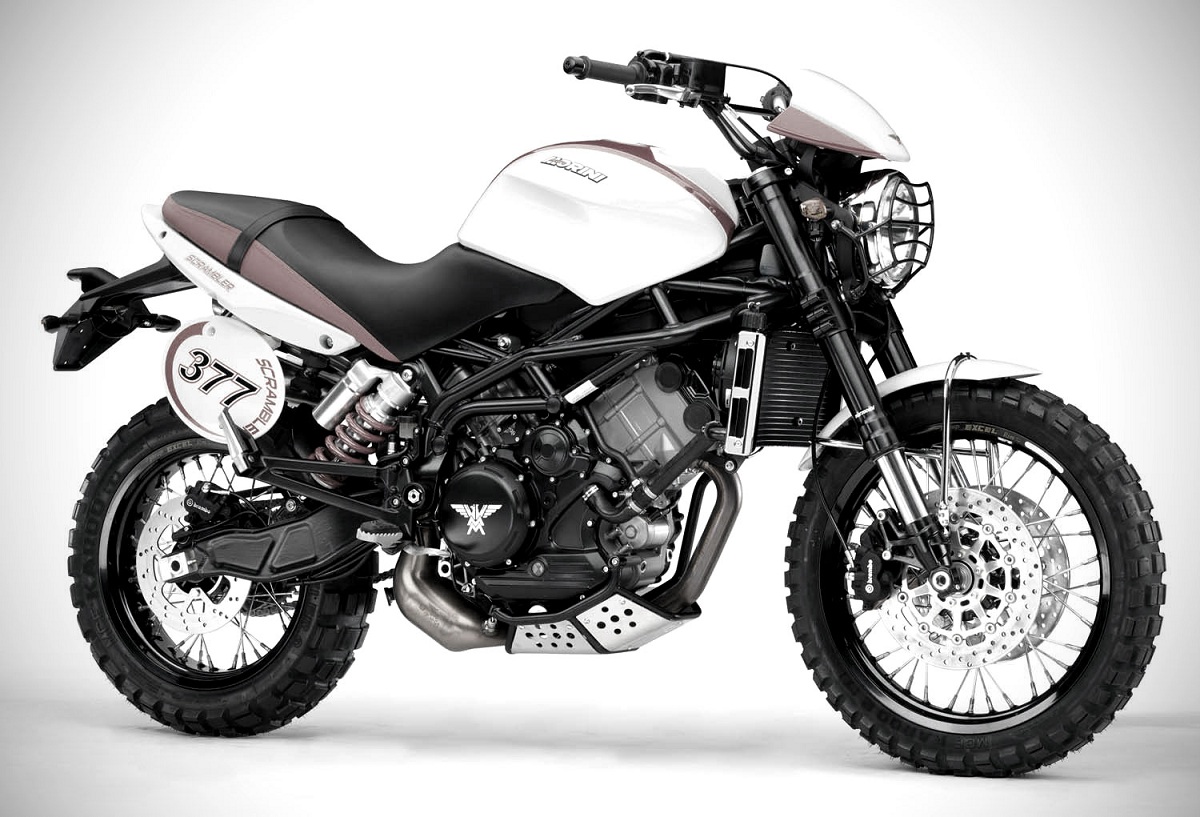
Moto Morini Scrambler 2008


More motorcycle companies should do scramblers. This one has that perfect combination of street and offroad looks. Its really a shame the company went under.

Moab


GMC “Twin Six” V12 hot rod


What a sweet idea! Definitively dont see many (any?) hot rod builds that use a Twin Six.

GMC produced a large gasoline V12 from 1960 to 1965 for trucks It was basically GMC's large-capacity truck 351 V6, doubled, with four rocker covers and four exhaust manifolds. Fifty-six major parts are interchangeable between the Twin-Six and all other GMC V6 engines to provide greater parts availability and standardization. It has 702 cu in (11.50 L), and while power was not too impressive at 250 hp (190 kW) for such a big engine, torque was 585 lb·ft (793 N·m). For firetrucks the revs waere increased to produce 299 hp (223 kW) at 3000 rpm and torque was increased to 630 lb·ft (850 N·m) at 1600-1900 rpm

Ferrari F40 1987


…this car. According to many the ultimate drivers Ferrari. The F40 was the first road car to break the 200 mph barrier (barely at 201 mph) and became such a success that from an initial production run of 300 Ferrari changed its mind and ended up making 1315. It was the last Ferrari whose design was overseen by Enzo Ferrari.